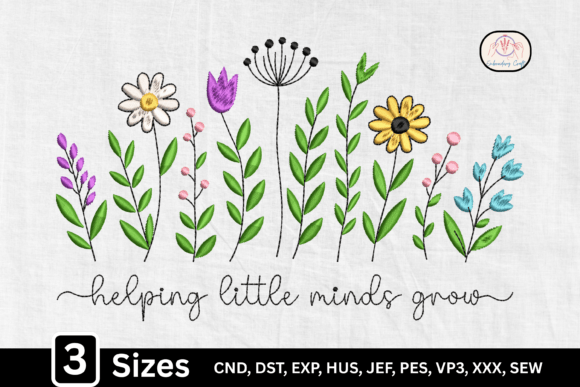
Helping Little Minds Wildflower Teacher Design Review
As a professional embroidery digitizer and product reviewer, I approach every new machine embroidery design with a critical eye toward production reality. It is not enough for a graphic to look beautiful on a screen; it must translate into clean stitches, maintain structural integrity on fabric, and ultimately create a sellable or giftable item. When evaluating the Helping Little Minds Wildflower Teacher design, my primary focus is on how this specific combination of whimsical florals and sentimental typography performs in real-world school appreciation projects. This review breaks down the practical application of this embroidery file for makers, Etsy sellers, and apparel decorators who need reliable results.
Visual Balance and Stitch Translation
The first impression of Helping Little Minds Wildflower Teacher is one of organic softness balanced with legible messaging. In the School category, designs often lean too heavily into rigid clip art or overly complex illustrations that become muddy when stitched. This design avoids that pitfall by utilizing a layout that allows for negative space. From a digitizing perspective, this is crucial. The separation between the floral elements and the "Helping Little Minds Grow" text suggests a thoughtful approach to stitch density.
When reviewing the artwork, I look for how the satin stitch borders interact with fill stitch areas. Whimsical flowers require smooth curves; if the digitization is poor, these curves become jagged or puckered. This design appears to use appropriate underlay strategies to support the top stitching, which is vital when working with the varied textures found in teacher apparel or tote bags. The typography seems sized appropriately for embroidery, avoiding microscopic lettering that would turn into illegible thread blobs on textured fabrics like canvas or linen.
Real-World Application: The Teacher Tote Bag Test
To truly evaluate this digital embroidery file, we must move beyond the monitor and consider a tangible scenario. Let us imagine preparing a custom tote bag design for an end-of-year teacher gift. Canvas totes are a staple handmade product for educators, but they present specific challenges due to their coarse weave and lack of stretch.
In this real-life case, Helping Little Minds Wildflower Teacher serves as an excellent centerpiece. However, success depends entirely on stabilization. Because the design combines detailed botanical elements with text, I would recommend using a medium-weight cutaway stabilizer rather than tear-away. Tear-away often leaves residue behind delicate floral stems or causes distortion when removing excess backing from intricate running stitch details. For a personalized gift intended to last through years of carrying books and supplies, the structural support of a cutaway ensures the design remains flat and professional after washing.
Furthermore, consider the placement. On a tote bag, the design should be centered vertically and horizontally relative to the bag’s seams, not just the hoop. This embroidery project benefits from being hooped with the grain of the fabric to prevent skewing. If you are an Etsy seller offering this as a finished item, photographing the bag in natural light will highlight the texture of the stitches and the vibrancy of the thread colors, signaling quality to potential buyers.
Apparel Considerations for Sweatshirts and Tees
Moving from accessories to custom apparel, this design translates well to sweatshirt embroidery. Fleece and French terry fabrics are forgiving, but they can swallow fine details. When stitching Helping Little Minds Wildflower Teacher on knit fabrics, verify that the stitch density is not too high. Overly dense designs on sweatshirts create a bulletproof vest effect that is uncomfortable to wear and prone to tunneling.
If the design includes an applique option for the flower petals, this is a massive advantage for apparel. Applique reduces total stitch count significantly, making the garment softer and more flexible. For commercial embroidery businesses producing bulk orders for school staff, applique versions also reduce machine run time, directly impacting profit margins. Always test the tack-down stitch to ensure it captures the fabric edge cleanly without fraying, especially on washed cottons.
Navigating Fabric Limitations and Hoop Constraints
While versatile, Helping Little Minds Wildflower Teacher requires careful handling in specific contexts. Not every substrate is suitable for this level of detail.
- Stretchy Performance Wear: Avoid using this design on thin, high-stretch athletic fabrics unless you have extensive experience with lightweight knits. The contrast between the stable embroidery and the stretching fabric can cause significant warping.
- Dark Fabrics: Before committing to black or navy garments, check the color palette. If the wildflowers rely on pastel threads, they may lack contrast against dark backgrounds. You may need to adjust thread colors or add a white underlay base to make the design pop.
- Small Hoop Sizes: Be wary of resizing this design down for 4x4 hoops. Reducing a design with text and intricate florals often compromises clarity. If your machine only supports small hoops, look for a specifically digitized mini version rather than shrinking the standard file.
- Curved Surfaces: Caps and curved sleeves are risky. Unless the design has been specifically digitized for cylindrical framing, the flat nature of the floral arrangement may distort on a hat front. Stick to flat surfaces for the best presentation.
Commercial Viability for Makers and Sellers
For creative entrepreneurs and small shop product developers, the value of an embroidery file lies in its repeatability and market appeal. Helping Little Minds Wildflower Teacher hits a sweet spot for the education niche because it balances professionalism with warmth. It avoids being overly juvenile, making it appropriate for K-12 teachers, administrators, and support staff alike.
When creating printable mockups or listing photos, ensure you represent the design accurately. Do not use digital renderings that look like vector art; customers expect to see actual stitch texture. If selling the finished product, emphasize the durability of the embroidery in your description. For those selling the design assets themselves, clearly state the licensing terms. Buyers need to know if they can use this file for commercial embroidery on physical goods or if it is restricted to personal use. Transparency builds trust and prevents copyright disputes.
Essential Pre-Stitch Checklist
Before running Helping Little Minds Wildflower Teacher on a final product, adhere to this professional workflow:
- Verify Specifications: Check the provided stitch count, dimensions, and color changes. Ensure they match your machine’s capabilities and hoop inventory.
- Run a Sew-Out: Never skip testing. Stitch the design on scrap fabric that matches your final project’s weight and texture. Inspect registration marks and text clarity.
- Audit Stabilizer Choice: Match the backing to the fabric, not the design. A heavy design on light fabric needs different support than a light design on heavy fabric.
- Check Licensing: Confirm whether the designer permits modification, resizing, or commercial sale of finished items derived from this file.
- Evaluate Washability: If the item is a tea towel or baby bib, wash the test sample to check for shrinkage or thread bleed before selling.
Final Thoughts on Production Value
Helping Little Minds Wildflower Teacher represents a strong contender for holiday embroidery, teacher appreciation week, and back-to-school merchandise. Its strength lies in its emotional resonance paired with a layout that respects the technical limitations of machine embroidery. By treating this design as a production asset rather than just a pretty picture, makers can elevate their brand consistency and customer satisfaction. Whether you are stitching a single personalized gift or fulfilling a boutique order, respecting the interplay between thread, fabric, and digitization is what separates hobbyist output from professional craftsmanship. Always prioritize testing and proper stabilization to ensure this beautiful sentiment stands the test of time and wear.