Math Lover Pi Heart Embroidery: A Business Review
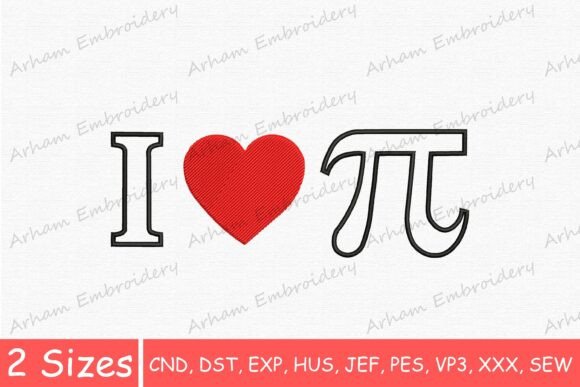
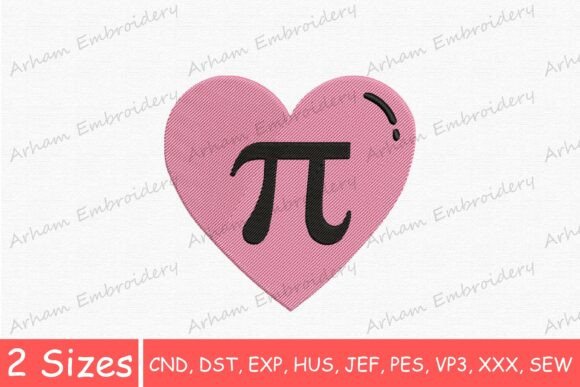
As a professional embroidery designer specializing in commercial merchandise and branded assets, I approach every new machine embroidery design with a critical eye toward production viability. When evaluating the Math Lover Pi Heart Embroidery for small business applications, my primary focus shifts from simple aesthetics to functional durability and brand alignment. This design, featuring a cute pink heart integrated with the Pi symbol, presents a unique opportunity for niche markets within the School category, but it requires strategic implementation to succeed as a professional asset rather than just a novelty craft project.
Visual Personality and First Impressions
Upon reviewing the Math Lover Pi Heart Embroidery, the immediate impression is one of playful professionalism. It strikes a delicate balance between academic rigor and approachable warmth. For a business owner, this visual duality is valuable. The design does not feel overly sterile or institutional, which can alienate customers in creative or service-based industries. Instead, it feels friendly and handmade, yet structured enough to serve as a legitimate logo accent or uniform detail.
The integration of the Pi symbol within a heart shape creates a compact silhouette that is generally favorable for embroidery. From a digitizing perspective, this merged geometry suggests efficient stitch paths, provided the file has been optimized correctly. The "cute" factor mentioned in the product description translates well to consumer goods, making it less intimidating for students or casual learners while retaining enough mathematical accuracy to satisfy educators and professionals. However, because the description highlights "pink" thread colors, businesses must consider how this specific colorway interacts with their existing brand identity. If your brand palette is strictly corporate blue or black, this design may require recoloring to maintain visual consistency across all design assets.
Strategic Applications for Small Business Merch
For small business owners, Etsy sellers, and merch creators, the versatility of an embroidery file determines its return on investment. The Math Lover Pi Heart Embroidery performs exceptionally well in several specific commercial scenarios where niche targeting drives sales.
- Tutoring Centers and Educational Brands: This is the most direct application. Used as a chest logo on polo shirts or as a sleeve accent on staff uniforms, it signals subject matter expertise without being boring. It humanizes the educator-student relationship.
- Cafés and Bookstores Near Campuses: A local coffee shop or independent bookstore can use this as a seasonal or permanent menu board accent, tote bag design, or barista apron detail. It acts as a subtle dog whistle to the student demographic, fostering community connection.
- STEM Non-Profits and Clubs: For organizations promoting mathematics, this design works beautifully as an embroidered patch for jackets, backpacks, or caps. Patches allow for bulk production at a lower cost per unit compared to direct garment embroidery.
- Handmade Product Sellers: Makers selling math-themed stationery, jewelry, or classroom decor can use this design on packaging accents or fabric tags. Adding a stitched element elevates the perceived value of a handmade product significantly over printed alternatives.
In these contexts, the design serves as more than decoration; it functions as a communication tool that identifies the wearer or business as part of a specific intellectual community.
Production Constraints and Technical Considerations
While the concept is strong, the physical execution of Math Lover Pi Heart Embroidery demands careful attention to technical limitations. As with any commercial embroidery project, the transition from screen to fabric introduces variables that can compromise quality if ignored.
Size Reduction and Detail Loss
The most significant risk with this design lies in scaling. Mathematical symbols often contain thin lines and precise curves that do not translate well to extremely small sizes. If you intend to use this as a tiny label on a product seam or a minimal cap logo, you must verify the minimum viable size. Reducing a complex shape below 2 inches often results in lost definition, where the Pi symbol merges into the heart outline. Always check the digitizer’s recommended minimum size before purchasing the digital embroidery file.
Fabric Texture and Stabilizer Selection
The performance of this design will vary drastically based on fabric texture. On smooth cotton twill or poplin, the stitches will lie flat and crisp, preserving the geometric integrity of the Pi symbol. However, on textured fabrics like fleece, terry cloth, or heavy canvas, the fine details may sink into the pile. For apron embroidery or tote bag design, using a water-soluble topping is non-negotiable to prevent stitch loss. Conversely, for stretchy knits used in custom apparel, a cut-away stabilizer is essential to prevent puckering around the dense satin stitches likely present in the heart border.
Cap and Curved Surface Challenges
If applying this to headwear, note that cap embroidery requires designs specifically digitized for curved surfaces. A flat design forced onto a cap front often distorts, causing the circle of the Pi or the symmetry of the heart to warp. Ensure the file you acquire includes a cap-specific version or test extensively before committing to a production run.
Impact on Brand Value and Customer Trust
Why invest in high-quality embroidery for a math theme? Because tactile branding builds trust. In the education and academic sector, precision matters. A poorly executed embroidery job with gaps, loose threads, or misaligned elements subconsciously communicates carelessness—a fatal flaw for a math tutor or STEM program. Conversely, a crisp, well-executed Math Lover Pi Heart Embroidery signals attention to detail and respect for the subject matter.
Furthermore, embroidered merchandise has a higher perceived longevity than printed items. A customer is more likely to keep and reuse an embroidered tote bag or wear a stitched patch repeatedly, extending the lifespan of your marketing. This sustainability aspect aligns well with modern consumer values and enhances the overall professionalism of your small business merch line.
Professional Designer Notes for Implementation
Before running a full production batch using this design, I strongly recommend following this validation protocol to ensure commercial success:
- Verify Licensing: Confirm that the embroidery file includes commercial usage rights. Personal licenses do not cover selling finished products or branding a business.
- Run a Black and White Test: Stitch out the design in a single color first. This removes the distraction of thread changes and reveals structural issues, density problems, or registration errors immediately.
- Check Thread Contrast: If adapting the pink heart to your brand colors, ensure sufficient contrast against the garment. Light grey thread on a white shirt will vanish; navy on black will lack impact. High contrast ensures readability at a distance.
- Create a Printable Mockup: Before stitching on expensive inventory, place the digital file over photos of your actual garments. Share this printable mockup with stakeholders or clients for approval to manage expectations regarding placement and scale.
- Audit Spacing and Kerning: If the design includes text alongside the symbol, inspect the spacing. Automated digitizing sometimes crowds letters. Manually adjusting kerning can make the difference between amateur and professional results.
- Test Wash Durability: If this is for uniforms or aprons that face frequent laundering, wash the test sample three times. Check for thread shrinkage or stabilizer residue that might alter the appearance after care.
By treating Math Lover Pi Heart Embroidery as a technical asset rather than just a cute graphic, small business owners can leverage its charm while maintaining the rigorous standards required for professional merchandise. Whether for a school spirit shop, a tutoring franchise, or a niche Etsy store, success lies in respecting the interplay between digital design and physical fabrication.