Minimalist Line Art Reading Woman Review
As an embroidery designer who frequently sources files for commercial production and custom client orders, I approach every new machine embroidery design with a critical eye. When browsing Creative Fabrica for assets that bridge the gap between modern aesthetics and stitchability, the Minimalist Line Art Reading Woman caught my attention. This design promises a celebration of calm moments and self-care through abstract female figures and continuous line art. Before adding this to my library for upcoming tote bag and apparel projects, I evaluated its practical performance, visual appeal, and suitability for real-world handmade products.
First Impressions: Visual Mood and Stitch Personality
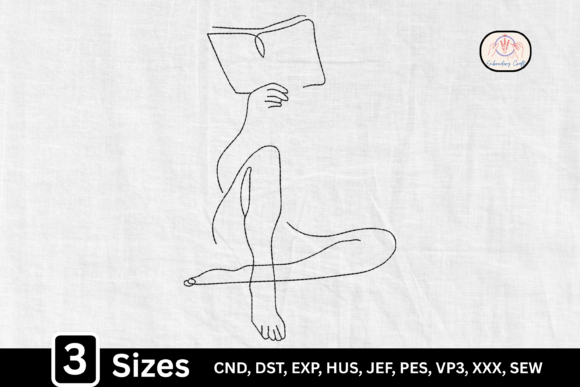
The immediate appeal of the Minimalist Line Art Reading Woman lies in its contemporary simplicity. In a market saturated with dense fill stitches and complex shading, this design offers a breath of fresh air. The abstract nature of the figure holding a book suggests literacy, relaxation, and introspection without being overly literal. For designers creating merchandise for book clubs, libraries, teachers, or cozy lifestyle brands, this visual mood is highly marketable.
From a technical perspective, continuous line art presents unique challenges and opportunities. Unlike a standard satin stitch logo or a heavy fill stitch landscape, this style relies on precision. The "stitching personality" here is delicate and fluid. It mimics the look of a pen sketch translated into thread. This makes it an excellent candidate for projects where you want the embroidery to feel integrated with the fabric rather than sitting heavily on top of it. However, this also means there is no room for error; registration issues or tension problems are far more visible in single-line designs than in dense patches.
Real-World Application: Tote Bags and Custom Apparel
I considered this design specifically for a run of canvas tote bags intended for a local literacy fundraiser and a line of sweatshirts for an Etsy shop targeting readers. The Minimalist Line Art Reading Woman scales beautifully for these applications. On a tote bag, the open space around the figure allows the natural texture of the canvas to show through, reinforcing the organic, handmade aesthetic. It avoids the "bulletproof vest" effect that dense embroidery can sometimes create on lighter weight bags.
For custom apparel, particularly sweatshirts and t-shirts, the minimalist approach is ideal. Heavy designs can distort knit fabrics and make garments uncomfortable to wear. This design’s likely lower stitch density maintains the drape of the garment. It works exceptionally well placed centrally on a chest or as a smaller motif on a sleeve cuff. For those in the School category or creating teacher appreciation gifts, this design strikes a professional yet personal tone that avoids looking juvenile.
Versatility Across Product Categories
Beyond apparel, this embroidery file shows promise for various home goods:
- Kitchen Towels and Aprons: The reading theme pairs surprisingly well with kitchen textiles for the "cozy baker" or "tea and books" niche. The line art style keeps towels absorbent and aprons lightweight.
- Nursery Decor and Baby Blankets: While the subject is an adult woman, the soft, abstract lines can be adapted for nursery pillows or blankets celebrating motherhood and quiet time. Always verify safety standards for baby items, but the lack of dense backing makes this softer against skin.
- Embroidered Patches: If you plan to turn this into a patch, note that continuous line art requires a very stable base. You may need to add a background element or a border to prevent the patch from losing structural integrity during cutting.
- Pillow Covers: This is perhaps the strongest use case. The design serves as elegant, non-intrusive decor that fits modern farmhouse, boho, and Scandinavian interior styles.
Technical Considerations for Embroiderers
While the Minimalist Line Art Reading Woman is visually stunning, successful execution requires attention to detail. As experienced embroiderers know, digital files behave differently on various substrates. Here are practical notes for using this Creative Fabrica embroidery asset effectively:
Stabilizer and Fabric Choice
Because line art often utilizes running stitch or narrow satin columns, stabilization is paramount. On stretchy fabrics like jersey knits for sweatshirts, use a cut-away stabilizer to prevent puckering. The tension of the thread can pull the fabric inward if not properly supported. For woven fabrics like linen or canvas, a tear-away or wash-away stabilizer may suffice, but always test first. If stitching on dark fabric, ensure your thread color contrast is high enough; subtle grey lines on black fabric may disappear in product photography or low light.
Hoop Size and Registration
Check the specific dimensions of the digital embroidery file before purchasing. Continuous line designs often have large jump stitches or specific travel paths. Ensure your hoop size accommodates the full design without excessive re-hooping, which increases the risk of misalignment. If you must resize the design, do so cautiously. Scaling line art down too much can cause stitches to overlap or become indistinguishable, while scaling up too much can make single lines look sparse or gappy.
Thread Colors and Finishing
This design celebrates minimalism, so thread selection matters. Matte threads often suit this aesthetic better than high-sheen rayon, which can sometimes look too industrial for "calm" art. Variegated threads could add interest but might also clutter the clean lines. Stick to solid colors that complement the fabric. After stitching, inspect small details closely. Line art exposes needle holes; if you make a mistake, removing stitches from a minimalist design can leave permanent marks. Always run a test stitch-out on scrap fabric identical to your final project.
Commercial Value and Brand Consistency
For Etsy sellers and small business owners, the value of an embroidery design extends beyond the stitch file itself. It impacts brand perception. The Minimalist Line Art Reading Woman conveys sophistication and intentionality. Using such design assets consistently across a collection helps build a cohesive brand identity. Customers looking for personalized gift items often associate minimalist art with higher quality and modern taste, potentially allowing for better pricing compared to generic clip-art style embroidery.
Furthermore, this design photographs well. Clean lines and negative space make for excellent printable mockup integration and social media content. In a crowded marketplace, products featuring this type of serene, intellectual imagery stand out to buyers seeking meaningful, aesthetic goods rather than fast fashion novelties.
Final Verdict: Is It Worth the Download?
After evaluating the Minimalist Line Art Reading Woman for potential commercial and personal use, I find it to be a valuable addition to a digitizer's or embroiderer's library, provided you respect the technical requirements of line art. It is not a "set it and forget it" file for beginners unfamiliar with stabilization, but for intermediate to advanced users, it offers significant versatility.
It excels in the School and lifestyle categories, bridging the gap between academic themes and modern self-care trends. Whether you are producing commercial embroidery for a boutique or crafting a handmade product for a craft fair, this design delivers aesthetic value. Just remember to verify the licensing terms on the Creative Fabrica product page to ensure your intended use—whether for physical products or digital modifications—is permitted.
Ultimately, the Minimalist Line Art Reading Woman is a testament to the power of less-is-more in machine embroidery. It reminds us that sometimes, a single, well-placed line communicates more emotion than a thousand satin stitches. For designers ready to embrace the challenge of precision and the beauty of simplicity, this file is worth exploring.